



How Often Should Utah County Windows Be Cleaned?
Most Utah County homes need professional window cleaning 2 to 4 times per year. Quarterly cleaning provides the best protection against hard water etching and mineral buildup, while biannual cleaning in spring and fall is the minimum for maintaining glass clarity in our arid, dusty climate. Homes near active construction zones in Lehi, Vineyard, or Eagle Mountain may need cleaning every 6 to 8 weeks during summer.
If you have ever cleaned your windows and noticed them looking hazy again within a few weeks, you are not imagining things. Utah County’s combination of extremely hard water, low rainfall, and nonstop construction activity makes this one of the toughest places in the country to keep glass clean. Generic advice from national blogs does not account for what we deal with here.
We have been cleaning windows across Utah County since 2019 and clean homes across the valley from Lehi to Spanish Fork. What follows is the schedule we recommend based on years of experience in this specific climate, not a recycled national average.
The Short Answer: 2 to 4 Times Per Year for Most Utah County Homes
Quarterly cleaning is the gold standard for Utah County. Four cleanings per year keep mineral deposits from building up long enough to bond to your glass, and it lines up well with our seasonal shifts: spring pollen, summer dust, fall debris, and winter grime.
Biannual cleaning, once in spring and once in fall, is the minimum we recommend. Two cleanings per year keep your windows presentable and prevent the worst hard water damage, but you will likely notice buildup between visits during the May through September sprinkler season.
Annual cleaning is better than nothing. But in a county where the water hardness regularly exceeds 300 mg/L of calcium carbonate (classified as “very hard” by the USGS), going 12 months between cleanings puts your glass at risk for permanent etching.
The right number depends on your specific situation:
Swipe horizontally to view the complete table.
| Your Situation | Recommended Frequency | Why |
|---|---|---|
| Standard Utah County home | 2x per year Spring and fall | Removes seasonal buildup before it bonds to the glass. |
| Home near active construction in Lehi, Vineyard, or Eagle Mountain | Every 6 to 8 weeks Spring through fall | Construction dust accelerates mineral bonding. |
| Home with sprinkler overspray hitting windows | 3 to 4x per year | Mineral deposits from hard water can etch glass when left untreated. |
| Home near Utah Lake or heavy tree coverage | 3 to 4x per year | Bug buildup and cottonwood pollen coat the glass seasonally. |
| Highland or Alpine large home with many windows | Quarterly 4x per year | More glass surface means more exposure, while recurring plans make each visit more cost-effective. |
| HOA community with exterior standards | 2 to 4x per year | Maintains compliance and curb appeal throughout the year. |
| Preparing to sell your home | Once before listing photos | Clean windows improve listing photos and first impressions during showings. |
For a full breakdown of what professional cleaning costs at each frequency, see our guide to window cleaning costs in Utah County.
What Makes Utah County So Tough on Windows?
Three factors work together to make Utah County one of the hardest places in the Intermountain West to keep windows clean: extremely hard water, almost no natural rainfall, and rapid construction growth that shows no signs of slowing.
Hard Water and Mineral Etching
Utah County tap water contains calcium and magnesium levels well above the national average. The USGS classifies water above 180 mg/L as “very hard.” Utah Valley regularly exceeds 300 mg/L.
When sprinkler water, rain, or even your garden hose dries on glass, those minerals bond to the surface. At first, the spots wipe off with some effort. After a few months of accumulation, they stop coming off. The minerals etch into the glass itself, creating permanent micro-grooves that trap more dirt and make the glass look perpetually cloudy.
Once etching happens, standard cleaning will not fix it. At that point, the glass requires acid-based professional treatment, or in severe cases, replacement. Regular cleaning prevents deposits from ever reaching that stage.
Dust, Pollen, and Construction Activity
Utah County averages about 17 inches of rain per year. The national average is 38 inches. Your windows rarely get a natural rinse.
On top of that, rapid residential and commercial development in Lehi, Vineyard, Eagle Mountain, and Saratoga Springs sends dust into the air from March through November. That fine construction dust sticks to glass, and when combined with hard water from sprinklers, it bakes on.
Cottonwood trees make May and June particularly rough. The sticky pollen and seed residue bonds to glass and traps additional dust on top of it. If you live near mature cottonwoods, you have probably noticed your windows looking noticeably worse during those two months.
Winter Freeze-Thaw Damage
Utah County averages 46 inches of snowfall per year, and winter night temperatures regularly dip below zero. When temperatures cycle above and below freezing (common November through March), any mineral deposits already on your glass get pushed deeper into surface-level scratches through expansion and contraction.
One professional clean in late October or November, before the first hard freeze, protects your glass through winter. Customers on our quarterly plan get this clean built into their schedule automatically.
How It Breaks Down by City
Every city in Utah County deals with a slightly different mix of these factors. This table reflects what we see across the valley based on the homes we clean each year:
Swipe horizontally to view the complete table.
| City | Biggest Challenge | Construction | Recommended Frequency | Notes |
|---|---|---|---|---|
| Lehi | Construction dust and hard water | Very high | Quarterly Every 6 to 8 weeks in summer | Silicon Slopes growth creates persistent, year-round dust. |
| Vineyard | Construction dust and Utah Lake bugs | Very high | Quarterly | One of the fastest-growing communities in the county. |
| Eagle Mountain | Dust and wind exposure | High | Quarterly in season | Western valley conditions create more wind-driven dust and less tree cover. |
| Saratoga Springs | Utah Lake bugs and construction | High | 3 to 4x per year | Lakefront homes experience heavier seasonal insect and pollen buildup. |
| American Fork | Construction dust and hard water | Moderate to high | Biannual to quarterly | A mix of established neighborhoods and active new development. |
| Pleasant Grove | Hard water and pollen | Moderate | Biannual | Heavy tree coverage creates more cottonwood debris during May and June. |
| Orem | Hard water and sprinkler overspray | Moderate | Biannual to quarterly | Mature landscaping makes sprinkler overspray a common source of buildup. |
| Provo | Hard water and rental turnover | Low to moderate | Biannual | Near-campus rentals can benefit from cleaning between tenants. |
| Highland | Hard water and large glass areas | Low | Biannual to quarterly | Larger homes have more windows, while recurring plans reduce the cost per cleaning. |
| Alpine | Hard water and elevation dust | Low | Biannual to quarterly | Higher elevation creates greater wind exposure. |
| Spanish Fork | Hard water and agricultural dust | Low | Biannual | Homes near farmland can pick up heavier seasonal dust. |
| Springville | Hard water and pollen | Low | Biannual | Tree-lined neighborhoods experience moderate pollen buildup. |
| Cedar Hills | Hard water and canyon wind | Low | Biannual | Canyon-adjacent homes occasionally receive wind-driven debris. |
| Lindon | Hard water and construction | Moderate | Biannual to quarterly | Development along the Geneva Road corridor is increasing dust. |
| Mapleton | Hard water and foothill dust | Low | Biannual | Bench-area homes may receive wind-blown foothill dust. |
If your city is not listed or you are not sure where you fall, reach out for a free estimate and we will give you a recommendation based on your specific home.
What Professional Window Cleaning Actually Looks Like (Our 8-Step Process)
Most homeowners have never watched a full professional window cleaning. They assume someone shows up with a squeegee and a bucket of soapy water. The actual process, at least the way we do it, is more thorough than that.
For any home that has not had professional window cleaning within the past year, we use traditional hand-cleaning rather than water-fed poles. Water-fed poles are a solid maintenance tool for homes already on a regular schedule. But they are not a substitute for a proper deep clean. A lot of Utah companies rely solely on water-fed systems because they are faster. That shortcut shows in the results.
Our process starts before we touch a single pane. We put on shoe covers or remove shoes before entering your home, then move furniture away from windows and place clean towels under our work area. From there, we dust all frames, sills, and tracks, and clear any cobwebs.
Each pane gets hand-scrubbed with a clean microfiber scrubber, followed by a non-abrasive scrub pad for stubborn spots like hard water deposits or paint overspray. We squeegee corner to corner for a streak-free finish, then detail every edge with a fresh microfiber cloth and dry the frames and tracks.
We are also the only window cleaning company in Utah that offers steam-based track detailing. It is a premium add-on, but customers who try it once almost always add it to every visit. The difference in the tracks alone is something people notice right away.
All of our cleaning products are eco-friendly and safe for pets, plants, and indoor air quality. We finish every window with a pure water rinse that helps prevent hard water spots from forming as quickly after we leave.
Learn more about our full residential window cleaning process and what each step involves.
How a Maintenance Plan Saves You Money (and Your Glass)
Consistent cleaning is the single most effective thing you can do to protect your windows from permanent hard water damage. A maintenance plan locks in that consistency and lowers your per-clean cost at the same time.
We offer three plan tiers, each with a different level of protection:
Swipe horizontally to view the complete table.
| Plan | Frequency | Rain Guarantee | Add-On Discount | Best For |
|---|---|---|---|---|
| Annual | 1x per year | 7-day touch-up | None | Budget-conscious homeowners who want a baseline professional cleaning. |
| Most Popular Biannual The Agave Way | 2x per year Spring and fall | 14-day touch-up | 10% off house washing, gutter cleaning, and other add-on services | Most Utah County homeowners |
| Quarterly | 4x per year | Unlimited touch-ups | 20% off all add-on services | Year-round clarity and the best value per cleaning |
Our quarterly plan includes unlimited touch-up cleans. If it snows and your windows look dirty two days later, text us. We will add you to our touch-up route and take care of it at no extra charge. We currently have over 70 customers on maintenance plans across all three tiers.
Many of our plan members add a house wash once a year and gutter cleaning twice a year to their plan. With 10 to 20% off those add-ons, the savings add up fast.
You may have seen other Utah companies advertising “rain repellent technology” or hydrophobic coatings that supposedly keep your windows cleaner longer. We have spoken with technicians who worked for those companies. The coatings do not hold up. A consistent cleaning schedule is the only reliable way to keep your glass clear in Utah County’s climate. Every dollar you spend on coatings is a dollar better spent on an actual cleaning.
Everything we do is backed by our 110% satisfaction guarantee. If we cannot make it right, you get a full refund.
Clean Windows, Higher Home Value
Utah County’s median home sale price sits at $548,000, up 7% over the past year. At that price point, routine exterior maintenance is not a luxury. It is an investment.
The National Association of Realtors reports that 97% of agents recommend curb appeal improvements before listing a home. Real estate industry surveys show homes with strong curb appeal sell for up to 7% more than comparable properties. On a $548,000 Utah County home, that is a potential $38,000 difference.
Clean windows are one of the most visible and cost-effective curb appeal upgrades you can make. Agents estimate that curb appeal investments yield roughly three times their cost in added resale value. The return on a few hundred dollars of professional window cleaning is hard to beat, whether you are selling soon or just want your home looking its best.
Clearer Windows Across Utah County
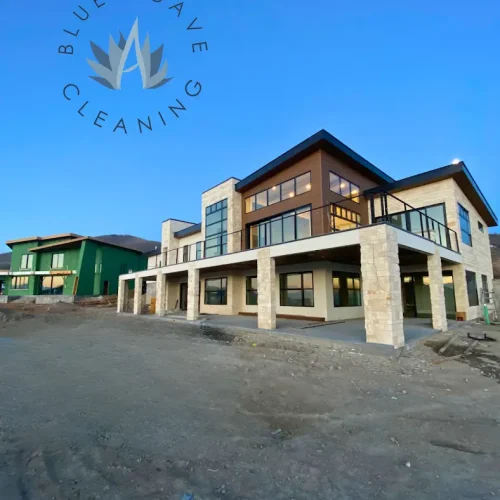
Take a closer look at recent window cleaning work completed for homeowners throughout Utah County.



Frequently Asked Questions
Can I just clean my windows myself instead of hiring a professional?
You can handle interior glass with a microfiber cloth and a diluted vinegar solution between professional visits. Exterior windows are a different situation. Safely reaching second- and third-story glass requires proper equipment, and removing hard water mineral deposits before they etch the surface requires tools and techniques that most homeowners do not have. DIY is fine for spot maintenance, but it does not replace a thorough professional clean.
Does hard water permanently damage windows?
It can. The timeline depends on exposure. A window catching daily sprinkler overspray can develop visible mineral bonding within 8 to 12 weeks during summer. Windows with less direct water contact may go 6 months before deposits become difficult to remove. Once the minerals etch into the glass surface, you are looking at specialized restoration or panel replacement. The key is catching deposits while they are still on the surface, which is why we recommend cleaning at least twice a year and quarterly for high-exposure homes.
What is the best time of year to clean windows in Utah County?
Spring (March through April) and fall (September through October) are the two most important times. Spring cleaning removes winter grime, road salt residue, and early pollen before sprinkler season starts. Fall cleaning clears summer dust and construction debris before the holiday season and the first freeze. If you only clean twice a year, those are the two to prioritize.
Is window cleaning worth it before selling my home?
Real estate agents consistently rank exterior cleaning among the highest-return improvements before listing. You get brighter listing photos, better first impressions at showings, and a faster sale. For a few hundred dollars of cleaning on a half-million-dollar asset, the math is straightforward.
Do you clean windows in winter?
We do. Our primary season runs March through November, but we offer winter maintenance cleans in December and January for customers who want year-round protection. Winter cleaning helps prevent freeze-thaw mineral damage and keeps your home looking sharp through the holidays. We schedule around weather conditions and never clean during active storms.
Get on a Schedule That Protects Your Glass
The right cleaning frequency for your Utah County home depends on your neighborhood, your sprinkler setup, and how close you are to active construction. But for most homes, 2 to 4 cleanings per year is the range that keeps windows clear and prevents permanent hard water damage.
Call us at 801-900-3338 or email blueagavecleaning@gmail.com for a free, no-pressure quote. First-time customers save $75, and you can get $100 off when you sign up for a service plan. No contracts, no upsells. Just clean windows and honest pricing from a team that has been voted Best of Utah Valley four years running.